
As Armenia hosted the United Nations Biodiversity Conference (COP17), The Armenia Project (TAP) stepped up its efforts to strengthen Armenian journalism and help local reporters bring the country's environmental challenges and perspectives to international audiences.
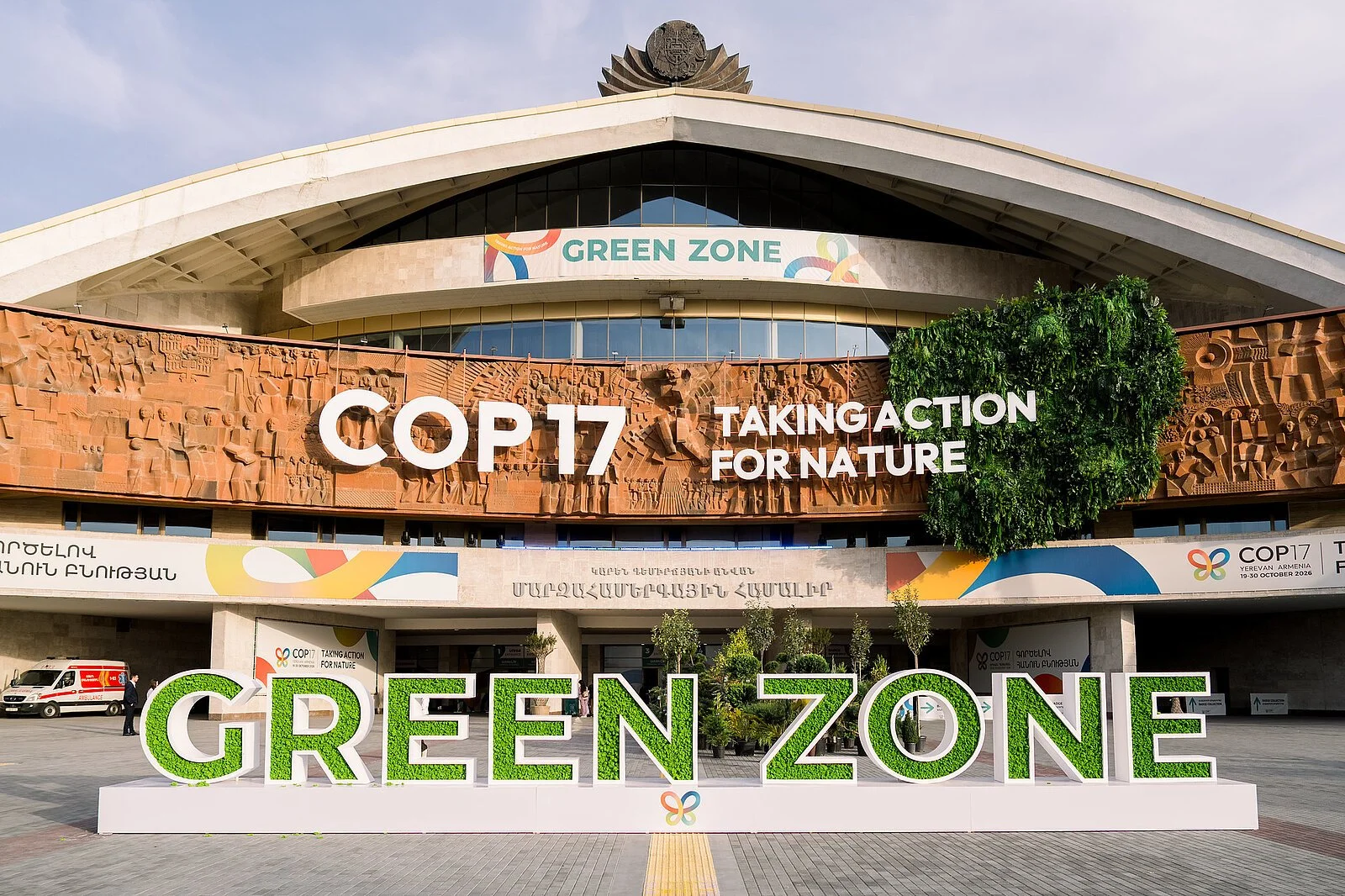
The COP17 Green Zone in Yerevan, the public side of the UN Biodiversity Conference, which took place October 19 to 30, 2026. Source: COP17 Green Zone Armenia.
Ahead of the conference, TAP organized a series of workshops led by experienced international journalists Philippa Nuttall, Michael Kodas and Eric Niiler. The sessions equipped Armenian reporters with practical tools for covering major environmental events, developing compelling stories and navigating the editorial expectations of international news organizations.
The initiative sought to address a persistent challenge for journalists working in smaller countries: how to turn important local developments into stories that resonate with readers around the world.
While Nuttall and Kodas explored approaches to reporting on major environmental events, including the opportunities and challenges they present, Niiler led an intensive two-day workshop focused on identifying internationally relevant story angles, crafting effective pitches and understanding how editors at major publications evaluate submissions.
Niiler also brought three former colleagues from The New York Times and The Wall Street Journal into the sessions virtually, giving participants an opportunity to pitch their ideas directly to experienced international journalists and receive feedback on their potential for broader coverage.
The workshops have already generated promising follow-up activity. Two participating journalists developed story ideas identified as having potential for international audiences. One reporter continued refining her story after the sessions and received additional guidance from Niiler, who is supporting its further development.
"The goal is to go beyond simply teaching journalists how to cover an international conference, and help them frame stories emerging from places like Armenia to highlight their relevance to the wider world," said TAP Executive Director Gayane Ayvazyan. "By connecting Armenian reporters with experienced international journalists and editors, we are helping create opportunities for Armenian perspectives to reach a much wider audience."
Participant feedback underscored the value of the initiative. Attendees of Niiler's workshop reported plans to apply what they learned immediately, particularly in developing stronger headlines, identifying compelling international angles and using individual experiences to illuminate larger environmental issues.
The workshops also highlighted the continuing need for practical journalism training and direct engagement with international editors. Participants expressed interest in additional opportunities to develop story ideas, receive editorial feedback and better understand how major news organizations select and commission coverage.
As the international spotlight turns to Armenia through COP17, TAP's initiative reflects a broader commitment to strengthening the country's journalistic capacity and ensuring that Armenian stories can continue reaching global audiences after the conference concludes.
Occupying just 0.02% of Earth's land area, Armenia is home to over 21,000 plant and animal species and some 60% of the Caucasus region's biodiversity (more information here). From October 19–30, 2026, Armenia hosted COP17, the UN Biodiversity Conference, placing its extraordinary natural heritage at the forefront of global conservation efforts.
Discussions focused on turning global commitments to protect nature into concrete action. Key negotiations concerned financing conservation, holding governments accountable for biodiversity targets, protecting forests and Indigenous communities, and requiring companies benefiting from genetic resources to share profits. Fourteen decisions have already been adopted, but major disagreements remain over funding and implementation. Delegates are considering mobilizing $200 billion annually for biodiversity.
About The Armenia Project (TAP)
The Armenia Project is a nonprofit educational organization dedicated to advancing Armenia’s democratic and economic development by enhancing its communications ecosystem. Through storytelling, media engagement, and global partnerships, TAP brings international attention to urgent challenges while empowering civil society.
